An Extensive Summary of the History and Development of Steel Casting Practices
Metal casting has actually played a crucial function in forming human world. Its origins map back to ancient craftsmens that crafted devices and accessories from liquified steels. Gradually, strategies evolved together with cultural influences, bring about considerable improvements. The Industrial Transformation noted a turning point, introducing automation and brand-new techniques. Today, the industry is discovering sustainable methods and cutting-edge innovations. Understanding this evolution reveals not only the artistry yet likewise the influence of metal casting on contemporary culture.
The Origins of Steel Spreading: Ancient Methods and Materials
The method of steel casting traces its origins to ancient people, where early artisans utilized the residential or commercial properties of liquified steels to create devices and ornamental items. These craftsmens mainly made use of copper and gold because of their malleability and reduced melting points, utilizing methods such as sand spreading and lost-wax spreading. Sand spreading involved forming a mold from sand, while lost-wax casting enabled elaborate styles by producing a wax version that disappeared throughout the process. The ability to cast steels revolutionized manufacturing, making it possible for the production of more long lasting and effective devices compared to their rock precursors. As understanding spread, different cultures adjusted these strategies, contributing to the development of metalworking. The emergence of metal casting marked a considerable milestone in human background, assisting in improvements in creativity, agriculture, and war, eventually preparing for future growths in metallurgy and production procedures.
The Growth of Bronze and Iron Spreading
Developments in metal spreading methods led to the advancement of bronze and iron spreading, noting a considerable evolution in material use and technology. Bronze, an alloy of copper and tin, emerged around 3500 BCE, offering enhanced resilience and resistance contrasted to its predecessors. This innovation enabled artisans to produce intricate devices, weapons, and decorative products, which added to the surge of intricate cultures.
Iron casting followed, getting prominence around 1200 BCE. The intro of actors iron, produced by melting iron and putting it right into mold and mildews, reinvented various industries. This material was stronger and much more abundant than bronze, facilitating mass manufacturing of tools and weapons. The capability to cast iron allowed the construction of larger, much more long lasting frameworks, eventually changing both farming and armed forces techniques. Jointly, the developments in bronze and iron spreading not only sophisticated technological capacities however also laid the structure for future metallurgical advancements.
The Impact of Society and Art on Casting Practices
Social meaning plays a significant function in metal casting, influencing the design and feature of cast items across different societies. Creative techniques and styles have actually progressed, reflecting the worths and aesthetic appeals of different cultures throughout background. This intersection of culture and artistry not just forms the physical features of actors things but also imbues them with much deeper meaning and importance.
Cultural Importance in Casting
Throughout history, metal casting has actually acted as a canvas for social expression, mirroring the worths, ideas, and visual appeals of varied societies. Each culture imbues its actors metal items with specific meaning, typically communicating styles connected to power, identification, and spirituality. For example, old human beings used casting strategies to produce divine beings and ritualistic artifacts, embodying their spiritual convictions. In contrast, medieval European craftsmens generated elaborate metalwork that symbolized standing and riches. Additionally, aboriginal groups used steel casting to create things that represented their connection to nature and area. Consequently, the steel spreading procedure transcends mere capability, coming to be a crucial tool through which social stories and heritage are maintained and renowned across generations.
Creative Methods and Designs
Virtuosity in metal casting has progressed greatly over time, shaped by the social contexts and imaginative motions of numerous cultures. From ancient human beings to modern art kinds, techniques have actually differed widely, affected by religious beliefs, social frameworks, and technological developments. For example, the detailed styles of bronze sculptures in old Greece reflected not only technical ability yet also thoughtful suitables of beauty. In contrast, African metal spreading typically highlighted functional objects, merging virtuosity with energy. The rise of contemporary art introduced abstract kinds, enabling artists to explore brand-new materials and ingenious casting techniques. Today, artists remain to bring into play historical styles while integrating contemporary impacts, leading to diverse expressions that honor tradition while pressing the boundaries of creative thinking in metal spreading.
The Industrial Change: Changing Metal Casting
The Industrial Transformation noted a crucial shift in steel spreading practices with significant advancements in casting methods. The increase of mechanization enabled faster and a lot more efficient manufacturing procedures, substantially enhancing manufacturing volume. This makeover not only improved the capacities of steel casting however additionally set the phase for modern-day commercial practices.
Advancements in Casting Strategies
Developments throughout the Industrial Change drastically changed steel casting methods, leading the way for better performance and accuracy. Key advancements consisted of the intro of the cupola heating system, which permitted constant melting of iron, considerably raising production prices. The growth of sand casting strategies enhanced the special info quality and uniformity of actors products, while using patterns made from steel further boosted accuracy. Furthermore, the incorporation of enhanced additives and alloys caused more powerful and a lot more long lasting spreadings. The shift from artisanal methods to more systematic methods noted a substantial modification, making it possible for suppliers to fulfill the increasing demands of automation. These innovations not just optimized processes but also expanded the applications of metal casting across various sectors.
Rise of Automation
As automation took hold throughout the Industrial Change, steel casting experienced an extensive makeover that transformed production techniques. The intro of vapor power and mechanized equipment streamlined processes, enabling much more reliable and constant production. Standard handcrafting techniques paved the way to machine-driven operations, which decreased labor prices and lessened errors. Technologies such as the molding device and automated pouring systems greatly boosted the speed and precision of casting. Furthermore, using standardized molds assisted in a consistent outcome, more improving the high quality of cast products (Aluminum Foundry). This change not only enhanced the ability for massive production yet additionally prepared for modern manufacturing methods, placing mechanization as a keystone of the progressing metal casting market
Effect On Manufacturing Volume
Industrial developments throughout the Industrial Transformation substantially raised manufacturing volume in steel spreading. The introduction of vapor power and mechanized processes enabled faster and a lot more reliable melting and molding of metals. Manufacturing facilities began taking on production line techniques, which structured manufacturing and reduced labor expenses. Technologies in furnace layout and the usage of iron and steel enhanced the top quality and longevity of actors products, dealing with expanding industrial demands. Additionally, the surge of transport networks assisted in the distribution of cast goods, even more boosting production. Subsequently, these growths not only increased the scale of metal casting procedures yet likewise diversified the range of applications, positioning metal casting as a necessary element of commercial growth during this transformative era.
Modern Spreading Methods: From Sand to Investment
While typical methods of steel casting have actually offered the market for centuries, modern-day casting methods have advanced significantly, offering improved precision and effectiveness. Contemporary methods include sand casting, investment spreading, die spreading, and shed foam spreading, each tailored to certain applications and materials.
Sand spreading remains preferred because of its adaptability and cost-effectiveness, appropriate for massive manufacturing. Investment spreading, understood for its ability to produce detailed layouts, uses a wax pattern covered with ceramic, permitting high dimensional accuracy. Pass away spreading, commonly used for non-ferrous steels, offers rapid production rates and superior surface area finishes, making it perfect for mass manufacturing.
Lost foam spreading supplies an unique approach by utilizing a foam pattern that evaporates throughout the putting process, enabling intricate shapes without the need for additional cores. Collectively, these contemporary casting approaches show the market's dedication to boosting top quality, minimizing waste, and improving manufacturing abilities.
Developments in Materials and Technologies
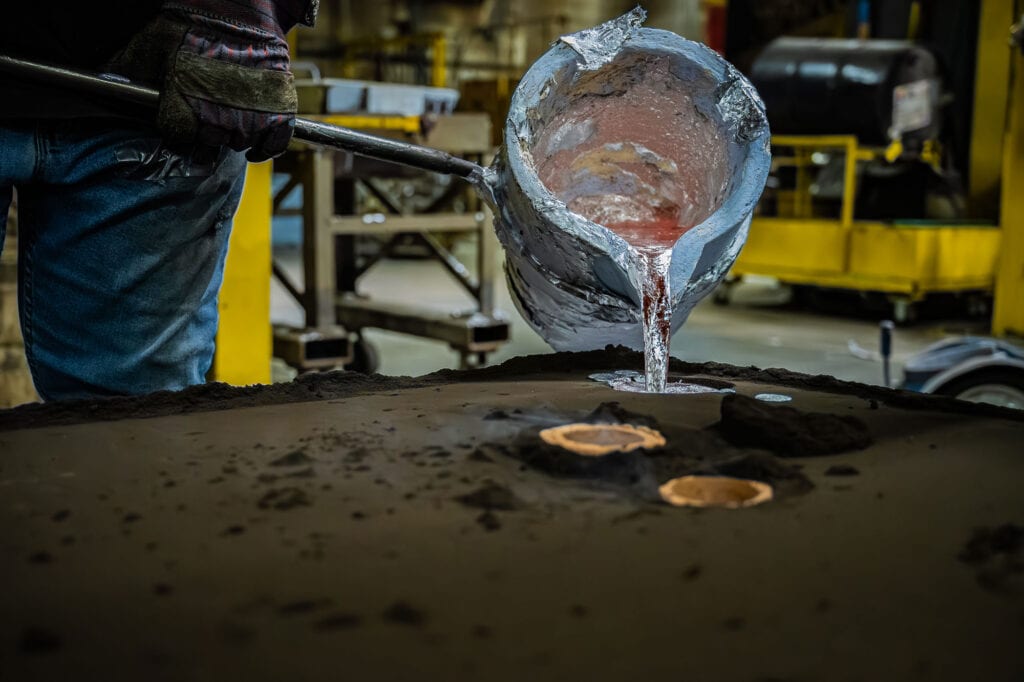
Furthermore, the intro of 3D printing technology has revolutionized mold-making processes, enabling quick prototyping and lowered preparations. This innovation promotes the development of complex layouts that would be difficult or difficult to accomplish with typical approaches.
Computer simulations and modeling have come to be essential tools, making it possible for engineers to anticipate casting flaws and enhance layouts before manufacturing. Such technologies decrease material waste and boost effectiveness, representing a considerable jump ahead in metal spreading techniques. In general, these innovations have redefined the abilities of the industry, driving it towards greater accuracy and effectiveness.
The Future of Metal Casting: Sustainability and Developments
As the steel spreading industry looks toward the future, sustainability and technological advancements are positioned to play pivotal duties in shaping its development. Enhancing pressure to minimize carbon impacts has actually resulted in the fostering of green techniques, such as recycling scrap steel and using renewable resource resources in production procedures. Advancements in materials science are also changing the landscape, with the growth of lighter, stronger alloys that enhance product efficiency while decreasing waste.
Additionally, improvements in automation and digital innovations, including 3D printing and artificial why not try these out knowledge, are simplifying operations, decreasing costs, and enhancing precision. These technologies allow more effective designs and faster prototyping, helping with personalized remedies for varied markets. As the industry accepts these try this web-site adjustments, it will certainly not just boost functional performance but also add to a more lasting future, straightening with worldwide ecological goals and customer needs for responsible production techniques. The future of metal casting is consequently readied to be both diligent and ingenious.
Regularly Asked Questions
What Are the Environmental Impacts of Steel Casting Practices?
Exactly How Do Casting Problems Impact Product High Quality and Security?
Casting defects considerably endanger product high quality and safety and security by introducing structural weak points, bring about possible failings under stress and anxiety. These defects can cause costly recalls, minimized performance, and raised responsibility for makers otherwise addressed properly.
What Qualifications Are Required for a Profession in Metal Casting?
A profession in metal casting generally needs a secondary school diploma, technological training in metallurgy or engineering, and experience in producing procedures. Certifications in security and quality control additionally improve work leads in this area.
Just How Does Steel Casting Contribute to Modern Manufacturing Processes?
Steel spreading markedly boosts modern-day manufacturing by making it possible for the creation of intricate forms, minimizing product waste, and permitting for mass production (Aluminum Foundry). Its convenience and performance enhance processes throughout numerous industries, driving technology and financial development
What Are the Costs Linked With Metal Casting Procedures?
The costs linked with steel spreading procedures include raw materials, labor, power usage, tools maintenance, and waste management. These costs can differ considerably based on the intricacy of the spreading process and manufacturing volume.
The technique of steel casting traces its roots to old civilizations, where early craftsmens used the homes of molten steels to create devices and decorative things. These artisans largely used copper and gold due to their malleability and reduced melting factors, employing methods such as sand casting and lost-wax casting. Sand spreading included creating a mold from sand, while lost-wax spreading enabled for detailed styles by creating a wax model that thawed away throughout the procedure. Advancements in steel spreading strategies led to the advancement of bronze and iron spreading, marking a considerable advancement in product use and modern technology. While traditional methods of steel casting have actually served the sector for centuries, contemporary casting strategies have advanced substantially, offering boosted precision and effectiveness.
Comments on “How Aluminum Foundry Supports High-Strength Metal Solutions”